Yasmina Papadopoulos,
FY2 Doctor, NHS Lothian, Scotland
Claude Monet (1840 – 1926) founded Impressionism, a movement whose name began as an insult. When his painting Impression, Sunrise was shown in 1874, the critic Louis Leroy sneered at the exhibitors in Le Charivari as “Impressionists” (Figure 1), and the name stuck (1). Monet is best known for the Water Lilies, the series of his garden at Giverny, many of which were painted while he had cataracts (2, 3).
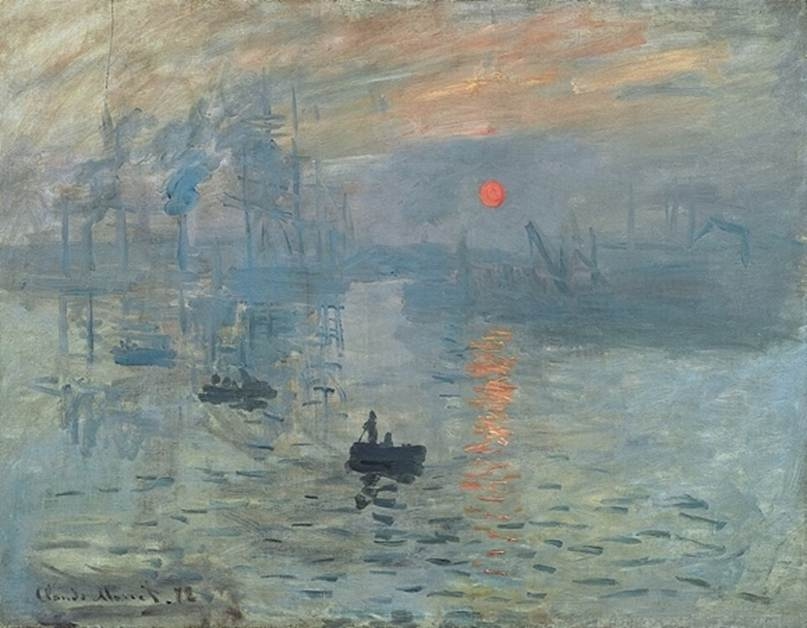
Figure 1. Impression, Sunrise (1872). Public access via Wikimedia commons.

Monet went from a starving artist who once attempted suicide due to crushing debt to a wealthy national treasure whose paintings fetched fortunes from international collectors (Figure 2) (2).
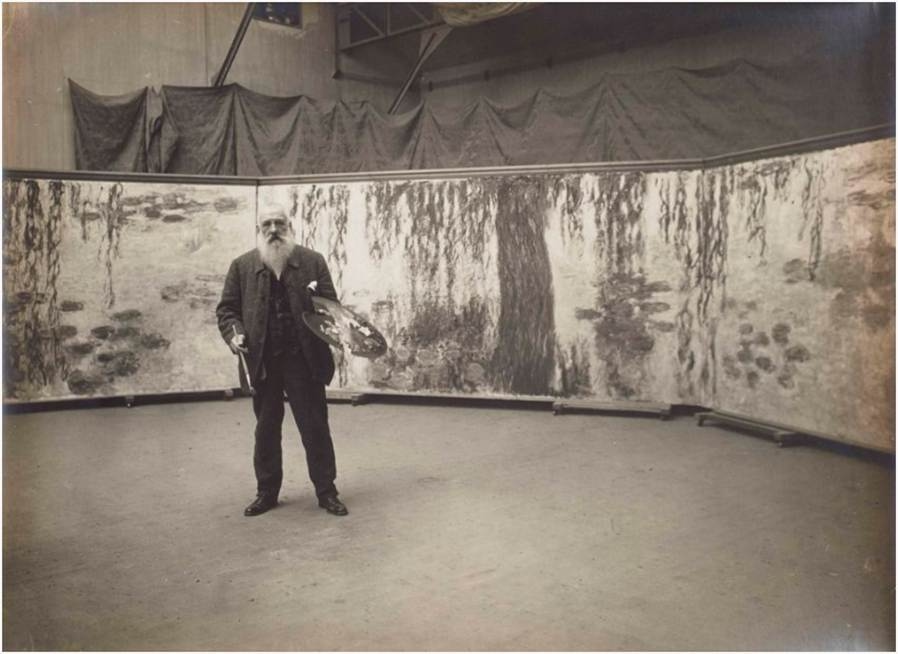
Figure 2. Claude Monet by his work ‘Les nymphéas’. 1920s. Public Access via Wikimedia Commons.

Colour was his craft, and in his sixties his eyesight began to fail (2). By 80 he told a journalist he would carry on painting “almost blind”, like Beethoven composing deaf (3). For more than a decade he also refused the surgery that might have helped, and that refusal shaped everything that follows (2). He later destroyed some of the canvases from this period, yet these blurred, fiery late works are now regarded by many art historians as forerunners of abstraction (3, 4).
This is the story of the disease that changed how one of history’s greatest painters saw the world, and of what happened when a surgeon finally took it away.
1907–1912: onset
Monet’s eyesight began to fail in 1907, aged 66 (2). Some historians see the first signs in his Venice paintings of 1908, such as The Grand Canal, Venice (Figure 3). and San Giorgio Maggiore at Dusk (Figure 4), where the distance softens (5). Bilateral cataracts were detected in 1908 and diagnosed in 1912, the right eye being more advanced. Monet doubted the diagnosis of his “country doctor” and put off any intervention. By around 1914 he was writing that colours “no longer had the same intensity for me”, that reds “had begun to look muddy” and that his painting “was getting more and more darkened” (2, 3).
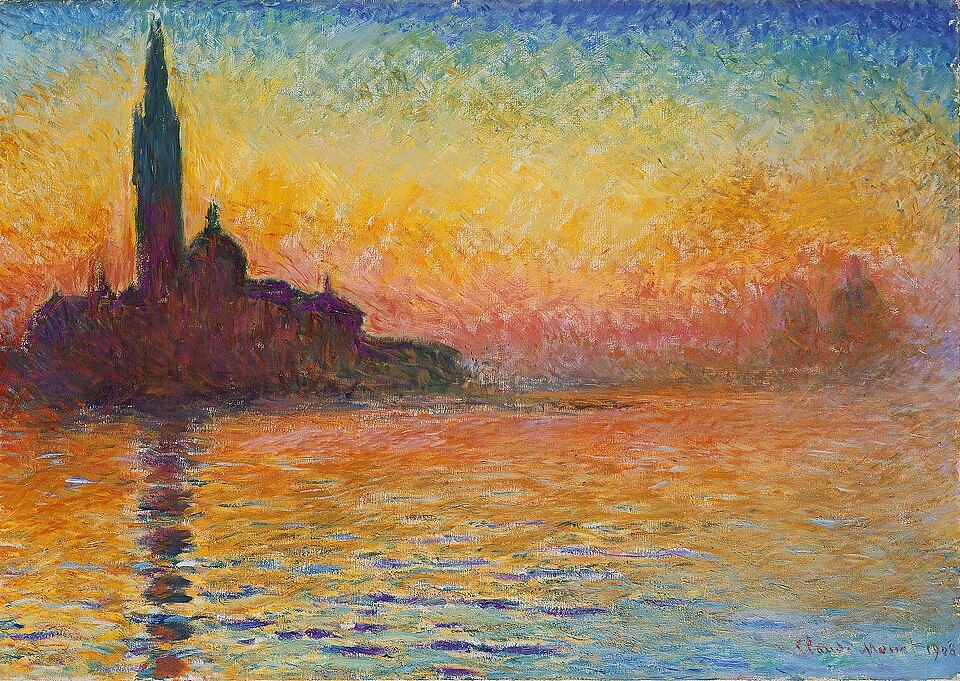
Figure 3. San Giorgio Maggiore at Dusk, Venice (1908). Public access via Wikimedia Commons.

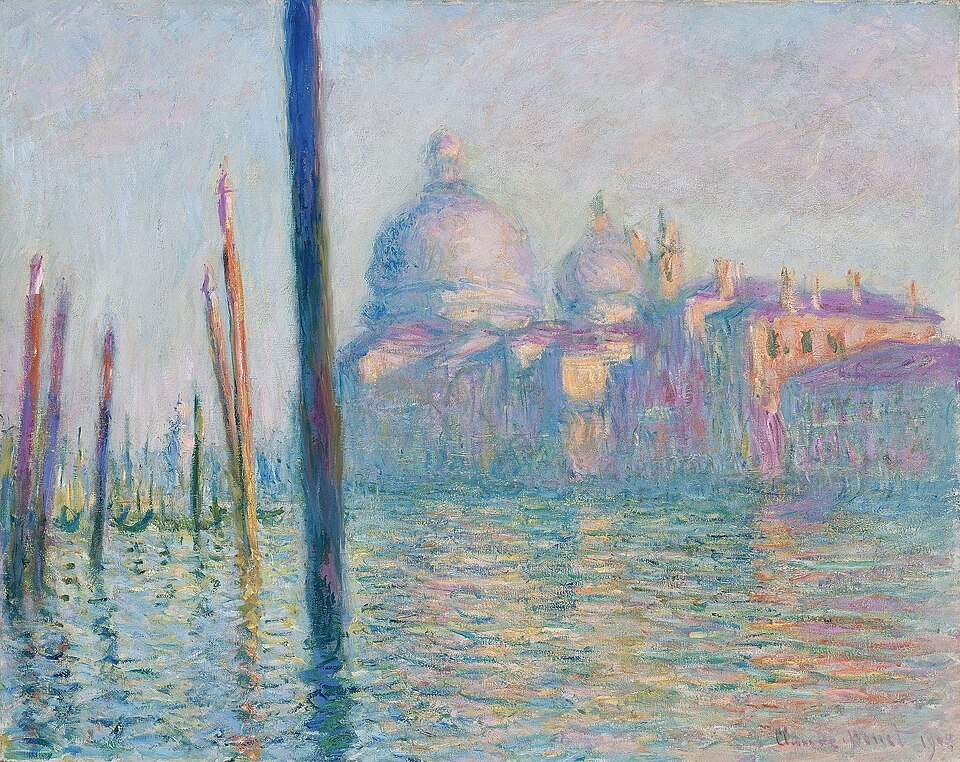
Figure 4. Grand Canal, Venice (1908). Public access via Wikimedia Commons.

His cataracts were nuclear. A brunescent nucleus acts as a yellow-brown filter that absorbs short wavelengths first, so blues and violets are lost, whites turn cream and the visual world shifts towards amber (Figure 5). For a painter whose subject was colour, this was an occupational disaster.
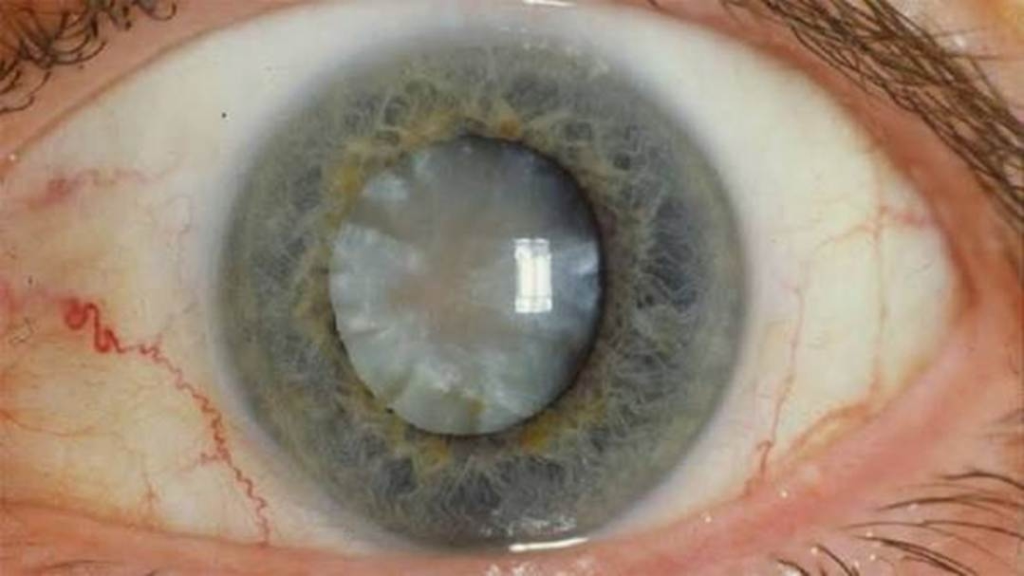
FIGURE 5. Nuclear cataract with brown nucleus.National Eye Institute, National Institutes of Health. Public Access via Wikimedia Commons.

1912–1922: painting through the haze, refusing the knife
The canvases tell on him. Colours lost their intensity and by 1918 he was discouraged. His palette moved towards browns, oranges and reds, greens and blues receded, and brushwork broadened as detail was lost. Compare the 1899 Japanese Footbridge (Figure 6), its crisp arch set against cool blue-green foliage, with the c. 1920 – 22 version (Figure 7), where the bridge is a mass of orange, red and brown strokes whose structure is barely discernible. He described seeing “everything in a fog” (3, 4).
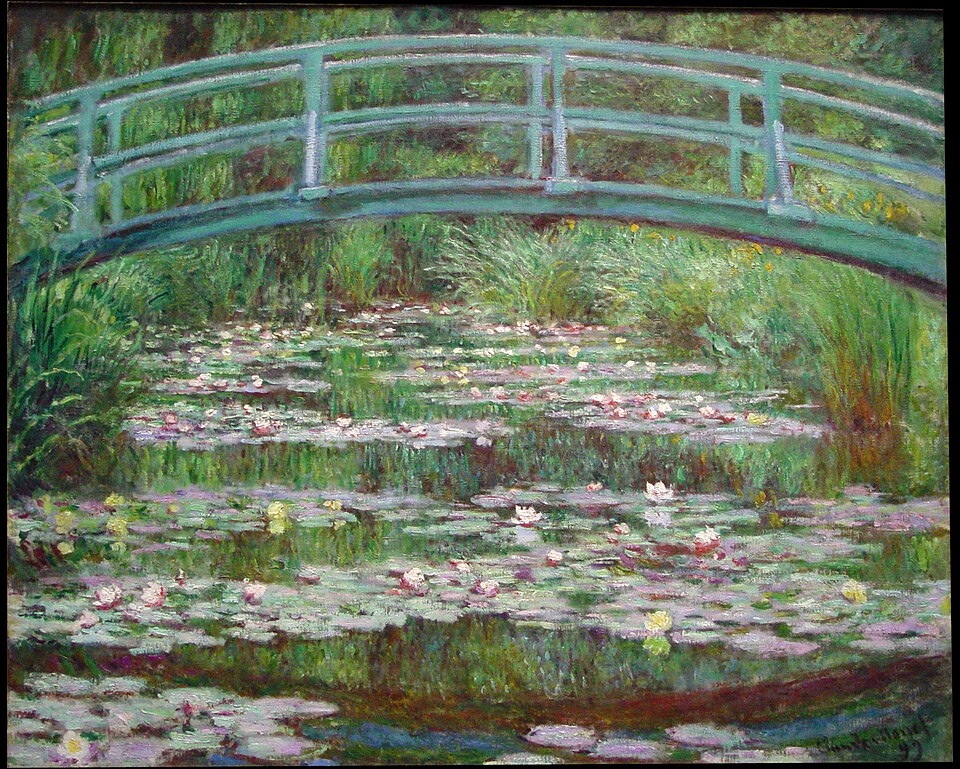
Figure 6. The Japanese Footbridge. 1899. Public access via Wikimedia Commons.

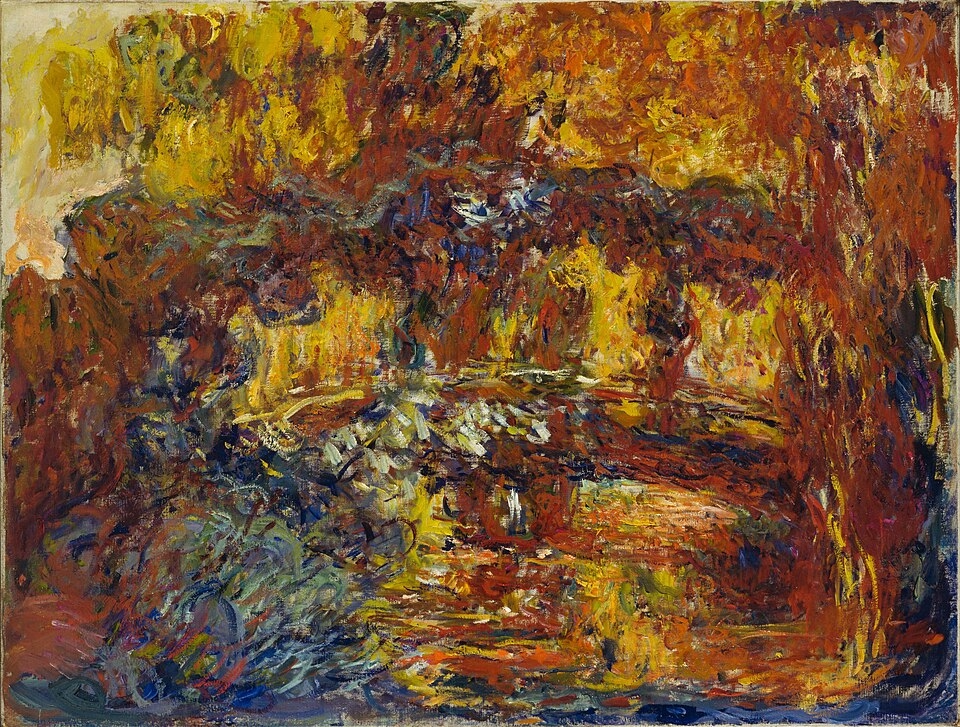
Figure 7. The Japanese Footbridge. Right 1920–22. Public access via Wikimedia Commons.

Throughout, surgery was on offer and Monet refused it. Georges Clemenceau, France’s wartime prime minister and close friend, urged him to operate in 1919 (Figure 8). Monet preferred, he told Clemenceau, to “make the most of my poor sight, and even give up painting if necessary” (6). In 1922 the surgeon Charles Coutela found light perception only in the right eye and 1/10 in the left, roughly 20/200, which is legal blindness. Still, he refused (2).
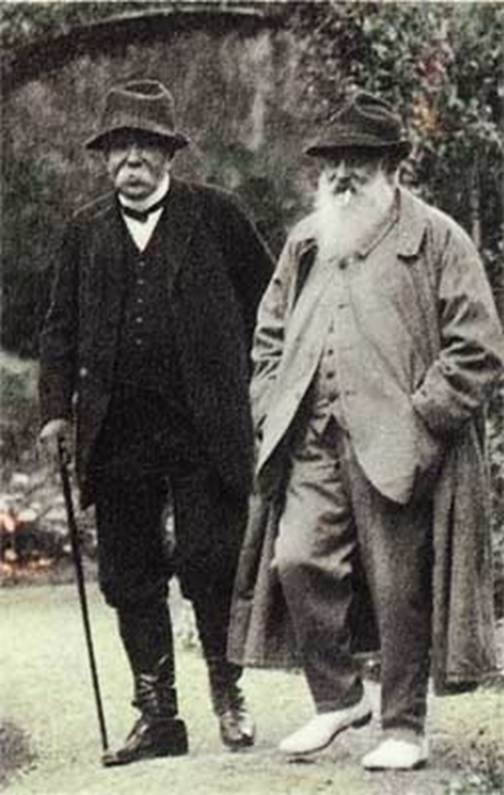
Figure 8. Claude Monet and Georges Clemenceau. 1921. Public access via Wikimedia Commons.

His fear had a basis. Renowned painters Mary Cassatt and Honoré Daumier both underwent unsuccessful cataract operations, resulting in them never picking up a brush again (4, 7). Cassatt, who also had diabetic retinopathy, underwent several operations on both eyes, all unsuccessful, and was treated with radium, which is now known to cause cataract. She lost her sight (7). And every patient of the 1920s was left aphakic: lens extraction dated back to Daviel in 1747, but Harold Ridley’s first intraocular lens came only in 1950, leaving thick high-plus spectacles with their magnification and distortion in the interim (4).
He adapted as best he could. In 1922, after Coutela’s examination, mydriatic drops let light pass around the clouded centre of the lens, and Monet wrote that they “permitted me to paint good things rather than the bad paintings which I had persisted in making” (2, 4). However, this was short lived (2). He is said to have labelled his paint tubes and kept them in a fixed order, so his hand could find the colour his eye could not (often repeated, never confirmed). Glare, worsened by the cataracts, was managed with a straw hat and by painting at dawn and dusk (4).
1923: surgery
What finally moved him was Clemenceau, and the Orangerie Museum. Monet had offered the water lily panels to the French state on 12 November 1918, the day after the Armistice, but could no longer see well enough to finish them. Clemenceau pressed him to operate, and Monet’s procrastination strained their friendship. In early 1923, aged 82, he agreed (2, 8).
Coutela operated on the right eye in stages, beginning with removal of a fragment of upper iris at the Ambroise Paré clinic in Neuilly, then an extracapsular extraction (2, 5). How well his eye was anaesthetised is not recorded, and with topical cocaine the standard of the day (Koller, 1884), that uncertainty may itself have been off-putting (5). One procedure was halted when he suffered a nervous breakdown (9). Post-operative care required him to lay flat for around ten days, sandbags either side of his head (2, 5). A man used to standing for hours at his easel made a terrible patient. He tore at his bandages and rowed with his carers (2).
In July 1923 the posterior capsule opacified, a common complication, and was removed at Giverny (2). Today Nd:YAG laser capsulotomy treats it in minutes.
1923–1925: aphakia and the return to work
Recovery was difficult. Three weeks after surgery Monet received aphakic spectacles, which made things worse: straight lines appeared curved, objects doubled and he feared falling. At first, he saw too much yellow; by the summer of 1924 blue had taken over (2, 4). He wrote bitterly to Coutela: “It is to my great chagrin that I regret having had this fatal operation”, and “it is criminal to have put me in this situation” (2, 4, 10).
The blue was cyanopsia. After years of adaptation to a brunescent lens, removal of the filter exposes the retina to a sudden excess of short-wavelength light (3). Glasses from the ophthalmologist Jacques Mawas and Zeiss lenses obtained by his friend André Barbier gave partial relief, and in 1924 he judged Mawas’s glasses “perfect” (4).
A popular theory goes further. The normal lens absorbs near-ultraviolet, and aphakic patients sometimes report perceiving it. The science writer Carl Zimmer wrote that Monet “began to see, and to paint, in ultraviolet”, attributing the whitish-blue cast of his post-operative water lilies to ultraviolet reflected from the petals (Figures 9 and 10). This remains a hypothesis: the evidence is anecdotal and unmeasured, and the same cast has other explanations, including cyanopsia and his pigments (11).
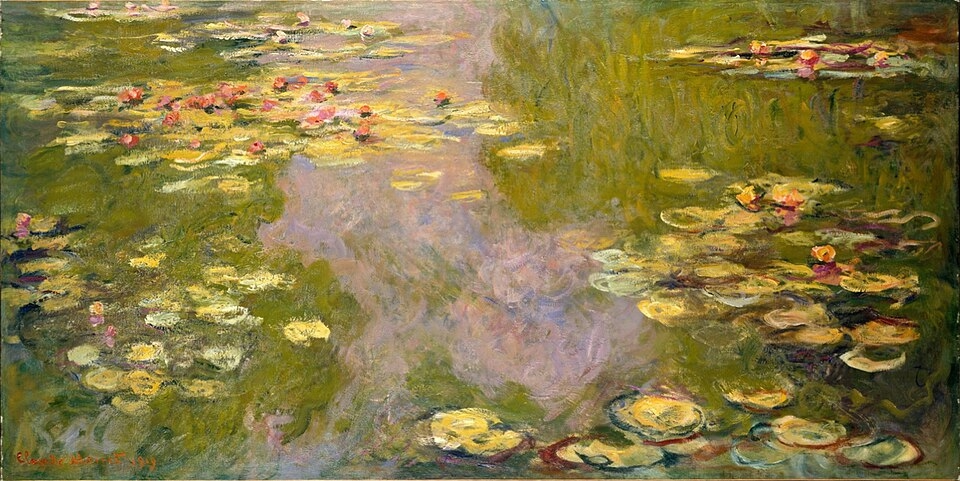
Figure 9. Water Lilies. 1917 – 19. More amber hues noted. Public Access via Wikimedia Commons.

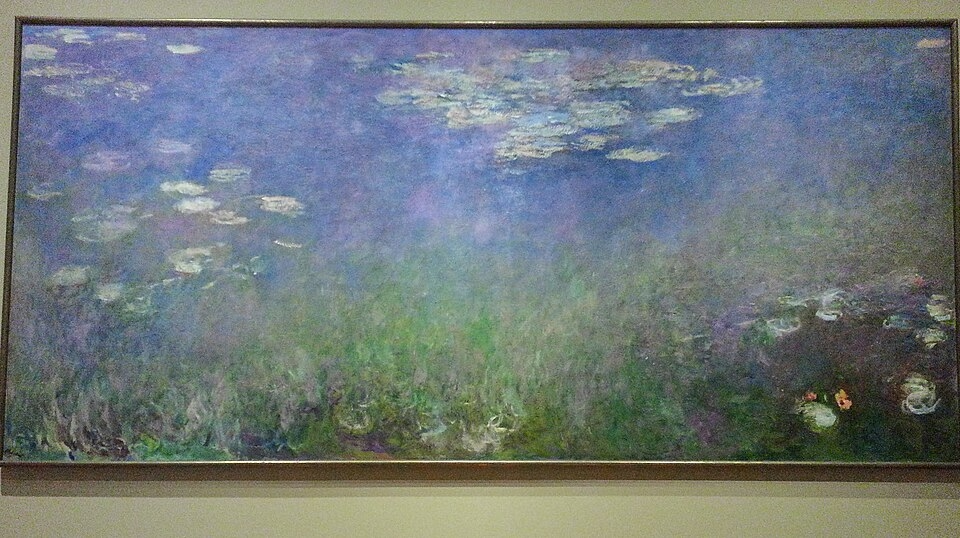
Figure109. Water Lilies. 1915 – 1926. More blue hues noted. Public access via Wikimedia Commons.

Yet he went back to work, unevenly. By 1925 he had regained useful vision in the right eye and his palette returned to cool blues and greens, close to his pre-1914 work (2, 3). He also destroyed or reworked the canvases he had painted through the cataract years, finding their colours too harsh (2, 4). So was the amber palette a stylistic choice or a reflection of the lens? The return to his earlier colours after surgery, together with his rejection of the paintings from his cataract period, suggests the latter, although cyanopsia confounds the comparison (2 – 4).
1925–1926: the last chapter
Improvement was uneven. In early 1925 Monet’s confidence collapsed and he considered withdrawing his donation of the panels; the sources do not say what triggered it. A heated exchange with Clemenceau, and a reconciliation by June, restored his drive, and he completed several of the panels that year (12). In spring 1926 a cough and weakness appeared, and in September an X-ray found lung cancer. His family shielded him from the diagnosis (9). He died on 5 December 1926, aged 86, and the Orangerie panels opened to the public on 20 May 1927 (9, 12).
Other artists
Monet was not alone. These artists had eye disease thought to have affected their work, though the strength of the evidence varies.
- Mary Cassatt: cataract and diabetic retinopathy. Her bold, detailed portraits became hazier and dominated by warm colours (4, 7). She switched from oils to pastels, which need no colour mixing, and by 1914 could no longer paint (7).
- Edgar Degas: progressive bilateral central visual loss and photophobia, probably an inherited retinal disorder, though the diagnosis is retrospective. Difficulty with fine detail may have affected his work, yet he continued to produce art for decades (13, 14).
- Georgia O’Keeffe: age-related macular degeneration and a retinal vein occlusion. She lived into her late nineties, and her case asks how an artist continues to work as central vision, which supplies fine detail and colour discrimination, is lost (13).
- J. M. W. Turner: cataract, allegedly, inferred from the yellow tones of his late work. His style was established long before, and the evidence is weak (14).
- Vincent van Gogh: xanthopsia, speculated. His blazing yellows and the halos around the lights of The Starry Night have fueled theories of yellow vision from digitalis (15). It remains speculation: a review in Eye found no substantiated evidence that he took it in a way that would explain his palette, and artistic preference was the more convincing explanation (14 – 16).
How a painting looks is not proof of how its painter saw. Monet is unusual in having clinical findings, his own letters and a before-and-after.
Many artists have lived with eye disease, neurological illness or psychiatric conditions, and each of them painted what they saw. Monet’s palette shifted from amber to blue as his lens clouded and was then removed. Van Gogh, who suffered recurrent episodes of severe mental illness, the diagnosis of which is still debated, painted The Starry Night in 1889 while a patient at the Saint-Paul-de-Mausole asylum. What looked normal to them often looks striking to us, because it came from an experience of the world that most of us will never share. Their paintings give us insight into their unique world (16).
Then and now
Today, with adequate local anaesthesia, small-incision phacoemulsification and an intraocular lens implant, we are better set up to treat a patient with Monet’s cataracts. Most modern lenses block ultraviolet light, and posterior capsule opacification is cleared by Nd:YAG laser in minutes. No sandbags, no ten-day immobilisation, no aphakic spectacles (3, 4).
A pattern runs through his story: each intervention, the drops, the lenses and the operation itself, brought a period of benefit followed by a new limitation.
For each of these artists, painting was central to identity, and failing vision threatened it. Most adapted, with drops and labelled tubes, with pastels, with whatever central vision remained, though some like Cassatt in the end could not.
In contrast, artist Concetta Antico has a rare genetic variant associated with tetrachromacy, a form of colour vision in which a fourth type of light-sensitive cone cell may allow the eye to distinguish subtle colour differences beyond the range of typical human vision (17). Her paintings offer a fascinating reminder that artists do not simply reproduce what they see, but interpret a world that may look entirely different to each of us.
References
1. Impression, Sunrise. Wikipedia. (Louis Leroy, Le Charivari and 1874.)
2. Monet and his cataracts. Hektoen International. 2017. (Timeline, surgery, complications and Clemenceau.)
3. The Cataracts of Claude Monet. The Ophthalmologist. June 2024. (Nuclear sclerosis, letter to Marcel Pays and ‘fog’.)
4. Gruener A. The effect of cataracts and cataract surgery on Claude Monet. Br J Gen Pract. 2015;65(634):254. (Monet’s comments on colour, drops and Mawas’s glasses; Daumier and Cassatt.)
5. Through the eyes of Claude Monet. Daily Art Magazine. (Venice paintings, anaesthesia and extracapsular extraction.)
6. Monet: blindness and artistic vision. Inside Art. (Letter to Clemenceau.)
7. Smith A. Through the eyes of artists, part one. Eye News. 2026;32(5). (Mary Cassatt.)
8. The unlikely friendship between a painter and a politician. France Today. (Clemenceau and the Water Lilies.)
9. Monet’s illnesses beyond cataracts. Hektoen International. 2020. (Halted procedure and lung cancer.)
10. How Monet’s artistic vision shone through blurry eyes. PBS NewsHour. (Letters of regret to Coutela.)
11. The Human Eye Can See in Ultraviolet When the Lens is Removed. PetaPixel. 2012. (Quoting Carl Zimmer.)
12. Archives of the genesis and history of the Water Lilies. Musée de l’Orangerie. (1925 tension and opening date.)
13. Nagy ZZ. Painting and the eye. Dev Health Sci. 2018;1(1):2–9. doi:10.1556/2066.1.2018.02.
14. Marmor MF. Vision, eye disease, and art: 2015 Keeler Lecture. Eye (Lond). 2016;30(2):287–303. doi:10.1038/eye.2015.197.
15. Demir D, Görkey Ş. Van Gogh and the obsession of yellow: style or side effect. Eye (Lond). 2019;33(1):165–6. doi:10.1038/s41433-018-0204-2.
16. Blumer D. The illness of Vincent van Gogh. Am J Psychiatry. 2002;159(4):519–26. doi:10.1176/appi.ajp.159.4.519.
17. Jameson KA, Winkler AD, Goldfarb K. Art, interpersonal comparisons of color experience, and potential tetrachromacy. Proc IS&T Int Symp Electron Imaging. 2016;28(16):1–12. doi: 10.2352/ISSN.2470-1173.2016.16.HVEI-145
Public access statement: All images are reproduced from public-access sources. The paintings (Figures 1, 3, 4, 6, 7, 9 and 10) are works by Claude Monet (1840–1926), whose copyright has expired. Images were obtained from Wikimedia Commons, where each file is tagged as public domain, except Figure 9, which is released by the Art Institute of Chicago under a CC0 Public Domain Designation. Figure 6 is also available under the National Gallery of Art’s Open Access programme. Figure 5 is a National Eye Institute (US National Institutes of Health) photograph. Figures 2 and 8 are historic photographs. No permissions were required. Files accessed 6 November 2026.
Figure references:
- Monet C. Impression, soleil levant [oil on canvas]. 1872. Paris: Musée Marmottan Monet; inv. 4014. In: Wikimedia Commons [Internet]. [cited 2026 Nov 6]. Available from: https://commons.wikimedia.org/wiki/File:Claude_Monet,_Impression,_soleil_levant.jpg
- Manuel H (attributed). Claude Monet with his palette in front of his work “Les Nymphéas” [gelatin silver print]. 1920s. In: Wikimedia Commons [Internet]. [cited 2026 Nov 6]. Available from: https://commons.wikimedia.org/wiki/File:Claude_Monet_with_his_palette_in_front_of_his_work_%E2%80%98Les_nymph%C3%A9as%E2%80%99,_photo_1920s,_attrib._to_Henri_Manuel.jpg
- Monet C. San Giorgio Maggiore at dusk [oil on canvas]. 1908. Cardiff: Amgueddfa Cymru – Museum Wales; NMW A 2488. In: Wikimedia Commons [Internet]. [cited 2026 Nov 6]. Available from: https://commons.wikimedia.org/wiki/File:Claude_Monet,_Saint-Georges_majeur_au_cr%C3%A9puscule.jpg
- Monet C. The Grand Canal, Venice [oil on canvas]. 1908. Boston: Museum of Fine Arts; 19.171. In: Wikimedia Commons [Internet]. [cited 2026 Nov 6]. Available from: https://commons.wikimedia.org/wiki/File:Claude_Monet,_Le_Grand_Canal.jpg
- National Eye Institute, National Institutes of Health. Nuclear cataract with brown nucleus [photograph]. In: Wikimedia Commons [Internet]. [cited 2026 Nov 6]. Available from: https://commons.wikimedia.org/wiki/File:Cataract_(28464844371).png
- Monet C. The Japanese Footbridge [oil on canvas]. 1899. Washington (DC): National Gallery of Art. In: Wikimedia Commons [Internet]. [cited 2026 Nov 6]. Available from: https://commons.wikimedia.org/wiki/File:Japanese_Footbridge-Claude_Monet.jpg
- Monet C. The Japanese Footbridge [oil on canvas]. c. 1920–22. New York: Museum of Modern Art; 242.1956. In: Wikimedia Commons [Internet]. [cited 2026 Nov 6]. Available from: https://commons.wikimedia.org/wiki/File:Claude_Monet_-_The_Japanese_Footbridge.jpg
- Unknown photographer. Georges Clemenceau and Claude Monet at Giverny [photograph]. Collection of Matsukata K and Kuroki T. In: Wikimedia Commons [Internet]. [cited 2026 Nov 6]. Available from: https://commons.wikimedia.org/wiki/File:Georges_Clemenceau_et_Claude_Monet.jpg
- Monet C. Water Lily Pond [oil on canvas]. 1917–19. Chicago: Art Institute of Chicago; 1982.825. [Internet]. [cited 2026 Nov 6]. Available from: https://www.artic.edu/artworks/97933/water-lily-pond
- Monet C. Water Lilies (Agapanthus) [oil on canvas]. c. 1915–26. Cleveland: Cleveland Museum of Art; 1960.81. In: Wikimedia Commons [Internet]. [cited 2026 Nov 6]. Available from: https://commons.wikimedia.org/wiki/File:Water_Lillies_-_Cleveland_Museum_of_Art_-_2014-11-26_(17727077246).jpg
