Yasmina Papadopoulos
Foundation Year 2 Doctor, NHS Lothian, Scotland
Introduction
From the origins of the words ophthalmology and blepharitis to ancient attempts to treat cataract and ingrowing eyelashes, the legacy of Greek medicine remains visible in modern eye care. Most of their theories have long been abandoned, yet ancient physicians developed detailed anatomical descriptions, recorded surgical procedures and helped establish a tradition of observing and documenting eye disease.
More than two millennia before modern ophthalmic surgery, Greek physicians were attempting to relieve visual impairment using the instruments and anatomical knowledge available to them. Their successes and limitations offer a fascinating perspective on how ophthalmology evolved from religious healing, philosophical speculation and empirical observation into a medical specialty.
From temples to medical schools
In ancient Greece, people sought relief from eye disease through both religious healing and emerging rational medicine. At sanctuaries dedicated to Asclepius, the god of healing, patients underwent purification rituals known as κάθαρσις (katharsis) and slept in a sacred area called the ἄβατον (abaton), hoping to receive a cure or remedy through a dream. This practice, known as ἐγκοίμησις (enkoimēsis), involved ritual sleep within the sanctuary.
The healing inscriptions at Epidaurus, dating principally from the fourth century BCE, record numerous miraculous recoveries, including those involving blindness and other eye complaints (1). One account describes Ambrosia of Athens, who was reportedly blind in one eye. As she walked about in the sanctuary, she laughed at some of the cures as incredible and impossible, After the god promised to cure her, he asked her to dedicate a silver pig to the sanctuary as a memorial of her ignorance. The inscription then describes the removal of the diseased eye and the application of a drug, after which she supposedly left the sanctuary able to see.
These accounts cannot establish the efficacy of the treatments described, but they illustrate the importance of eye disease in the ancient experience of illness and healing. People travelled far and wide in the hope of recovering their sight, and the eye occupied a prominent place in religious approaches to health.
Alongside these traditions, Greek physicians increasingly sought natural explanations for disease. The Hippocratic Corpus, a collection of medical writings associated with Hippocrates and his followers, describes ocular inflammation with recommendations including dietary regulation, bathing, topical applications and, in some circumstances, cautery (2).
These treatments were informed partly by the theory of the four humours: blood, phlegm, yellow bile and black bile. Their balance was believed to determine health, physical characteristics and temperament. Illness was attributed to an imbalance of these fluids, and an inflamed eye could be interpreted as a site where excess humour had accumulated.
The Hippocratic writings also describe ocular signs in patients with other illnesses. Sparkling eyes were associated with tuberculosis, squinting in postpartum fever was considered a poor prognostic sign, and abnormal eye movements could be interpreted as evidence of serious illness (2).
Understanding sight: competing theories and the evil eye
Greek thinkers were fascinated by the mechanics of vision. Their competing theories reflected a fundamental question: did sight arise from something leaving the eye, or from something entering it?
Empedocles, a fifth-century BC Greek philosopher and poet, proposed an emission theory of vision in which fire within the eye interacted with light from the external world. Plato, the great philosopher and founder of the Academy in Athens, developed a related explanation, arguing that an internal visual fire combined with daylight to establish a connection between the observer and the object.
By contrast, Democritus and other atomists proposed that objects emitted thin images of themselves, which travelled through the air and entered the eye. Aristotle rejected the idea that visual rays leave the eye. Instead, he argued that a transparent medium, activated by light, transmitted the object’s qualities to the observer.
The idea that the eye could exert an influence beyond simply seeing also shaped Greek culture. The belief in the evil eye, βασκανία (baskania), was associated with the harmful power of an envious or hostile gaze (3). It remains familiar in modern Greece, where someone believed to be affected may be described as having τὸ μάτι (to mati), literally “the eye”.
Several thinkers attempted natural explanations for this phenomenon. Plutarch, the Greek philosopher and biographer, proposed that invisible fumes could leave the eyes of an envious person and enter another’s body. Children were considered particularly vulnerable because they were thought to be delicate and susceptible to external influences. Envy, φθόνος (phthonos), was regarded as a principal cause, making excessive praise of a beautiful child potentially dangerous. The expression “evil eye” also appears in the New Testament (3).
Protective objects reflected these strong beliefs. In the sixth century BCE, Athenian potters produced drinking cups known as κύλιξ (kylix), decorated with large painted eyes. When raised to the drinker’s face, the eyes appeared to replace the drinker’s own, potentially acting as protective charms (Fig. 1) (4).
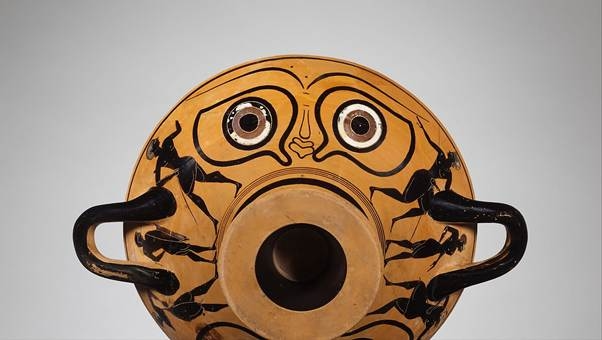
Fig. 1. Greek Kylix. The Metropolitan Museum of Art, New York (Accession No. 56.171.34). https://www.metmuseum.org/art/collection/search/246569. Open Access (CC0).
The Γοργόνειον (Gorgoneion), a representation of a Gorgon’s terrifying face, appeared on shields, armour, buildings and household objects. Its frightening gaze was intended to ward off hostile forces (4). Blue glass eye charms, known today as ματάκι (mataki), subsequently became widespread across the eastern Mediterranean through successive periods of cultural exchange (Fig. 2) (5).

Fig. 2. Blue glass eye sold in shops throughout Greece. Image by LoggaWiggler from Pixabay
In Byzantine times, Christian prayers were written against βασκανία (vaskanía) i.e. the evil eye / bewitchment, and some protective traditions continue today. The modern Greek term ξεμάτιασμα (xematiasma), referring to the ritual removal of the evil eye, reflects the persistence of these beliefs.
These traditions illustrate how the eye became associated with both the power of sight and the fear of unseen harm.
From observation to anatomy
The search for natural explanations encouraged closer investigation of the eye itself. Alcmaeon of Croton, a Greek natural philosopher active around the fifth century BCE, is associated in later accounts with early anatomical investigations and the connection between the eyes and the brain (6). Although the surviving evidence is limited, his work is often discussed in the history of early anatomical thought.
A more systematic approach emerged in Hellenistic Alexandria during the third century BCE. Herophilus, a physician who undertook anatomical investigations, is associated with important advances in the study of the nervous system, including the optic nerve and the structures of the eye (7). His work formed part of a broader movement towards direct anatomical investigation.
Aristotle, the great ancient Greek philosopher of the fourth century BC, also examined animal eyes and described their structures, although he placed the central seat of sensation in the heart rather than the brain. These early investigations reveal how anatomical observation could advance even when the physiological explanations remained incorrect.
Greek-speaking physicians continued to develop these descriptions during the Roman period. Rufus of Ephesus, a physician known for his anatomical writings, contributed to the terminology used to describe the body. Galen of Pergamon, whose medical writings profoundly influenced later medicine, produced extensive accounts of ocular anatomy (8).
Both physicians described the crystalline lens as central to vision, reflecting the limitations of the anatomical and physiological knowledge available to them. Modern ophthalmology recognises the retina as the light-sensitive tissue responsible for converting light into neural signals (Fig. 3).
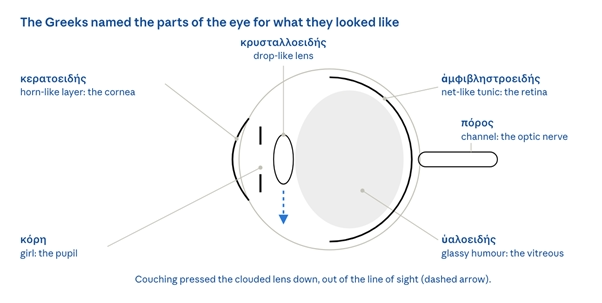
Fig. 3. Parts of the eye named by the ancient Greeks. Original illustration by the author.
Galen also proposed that πνεῦμα ψυχικόν (pneuma psychikon), or psychic spirit, travelled from the brain to the eye along the optic nerve. His physiological explanation was incorrect, but his writings described ocular structures including the optic nerves, extraocular muscles, conjunctiva, sclera and aqueous humour (8).
Galen’s authority was so influential that many of his anatomical and physiological teachings remained central to medical education for centuries. His legacy illustrates both the value of detailed observation and the danger of allowing an influential theory to persist without sufficient reassessment.
The Greek language of ophthalmology
Every ophthalmologist uses terminology derived from Ancient Greek, often without realising it. The language preserves traces of how ancient physicians described the eye and interpreted its appearance.
| Ancient Greek | Meaning | Modern relevance |
| ὀφθαλμός | Ophthalmos — eye | Ophthalmology |
| βλέφαρον | Blepharon — eyelid | Blepharitis |
| κερατοειδής | Keratoeidēs — horn-like | Keratitis; corneal terminology |
| κόρη | Korē — girl or maiden; pupil | Corectopia, anisocoria |
| γλαυκός | Glaukos — bluish-grey | Glaucoma |
| τραχύς | Trachys — rough | Trachoma |
| ὑπόχυσις | Hypochysis — a pouring beneath | Ancient terminology associated with cataract |
| καταρράκτης | Katarrhaktēs — waterfall or rushing down | Cataract |
| ἀμφιβληστροειδὴς χιτών | Amphiblēstroeidēs chitōn — net-like tunic | Retina |
The Greek word κόρη (korē) meant “little girl” and was also used for the pupil. One explanation is that the tiny, reflected image visible in another person’s pupil resembles a little person. The root survives in modern terms: corectopia describes displacement of the pupil, while anisocoria describes unequal pupil sizes. The connection is a reminder that Ancient Greek remains embedded in the language of modern ophthalmology.
The word καταρράκτης (katarrhaktēs), meaning a waterfall, reflects the historical conception of cataract as material descending in front of the pupil. Ancient physicians did not understand cataract as an opacity of the lens in the modern sense. The term passed through later medical usage into English.
Similarly, γλαύκωμα (glaukōma) referred historically to a grey-blue or cloudy appearance of the eye. Its meaning has changed substantially: modern glaucoma describes a group of optic neuropathies characterised by progressive damage to the optic nerve, rather than simply a change in ocular colour or appearance.
The term ἀμφιβληστροειδὴς χιτών (amphiblēstroeidēs chitōn) describes the retina as a net-like tunic. Its modern name reflects the Latin rete, also meaning net. These examples show how historical descriptions survive in clinical terminology even when our understanding of the underlying anatomy has evolved.
Treatments, tools and surgery
Ancient Greek eye care combined observation and practical treatment with theories that are no longer accepted. The available approaches included dietary regulation, topical preparations and surgery.
Diet and regimen
Rest, regulated food and drink, and bathing were prescribed to restore the balance of the humours. These recommendations reflected the wider principles of ancient medicine rather than a specific understanding of ocular disease.
Eye salves
The word κολλύριον (kollyrion) referred to an eye preparation and is the origin of collyrium. Recipes used ingredients such as minerals, plant extracts, honey and wine. Honey has antimicrobial properties under certain conditions, although the historical preparations cannot be assumed to have been safe, sterile or clinically effective.
Cataract surgery
The best-known ancient procedure was couching, in which a needle displaced the opaque crystalline lens downwards and out of the visual axis. The ancient term ὑπόχυσις (hypochysis) was associated with the belief that material had collected in front of the pupil.
The fullest surviving Greek account of eye surgery is associated with Paul of Aegina, a Byzantine physician and surgeon writing in the seventh century CE (9). Although the procedure was known much earlier, Paul provides a detailed description of its practical execution. A historical study has proposed cataract couching as a Hellenistic surgical innovation (10).
The patient sat facing the light while an assistant stabilised the head. The surgeon passed a copper needle through the sclera and pushed the clouded lens downwards, out of the line of sight. Paul warned against testing vision during or immediately after the operation because the lens might rise again, and he recommended keeping the eye bandaged for approximately a week (9).
The operation took place without anaesthesia, magnification, antisepsis or antibiotics. Although moving the opaque lens could restore some useful vision, the procedure carried considerable risks and left the eye without its normal focusing lens. Its historical significance should therefore be distinguished from its clinical limitations.
Trichiasis and eyelid surgery
Paul also described the management of trichiasis, in which misdirected eyelashes abrade the cornea and may threaten vision. A common cause is trachoma, particularly in its cicatricial stages. For a small number of stray lashes, Paul recommended removal with forceps; other surgeons advocated cauterising the follicle (9,11).
Celsus, the Roman medical writer, had earlier described cauterising lash roots with a slender heated iron needle. Paul’s Epitome of Medicine also includes operative management of trichiasis involving the eyelid itself (11).
The underlying problem remains familiar to ophthalmologists today. Epilation is still used in selected cases, although lashes may regrow. Electrolysis and other methods of follicle ablation can provide more definitive treatment for individual lashes. These modern techniques should not be equated with ancient cautery, and treatment of associated entropion requires correction of the eyelid malposition itself.
Instruments and the specialist eye surgeon
The surviving instruments and pharmaceutical stamps provide material evidence that ancient eye care extended beyond theory. They suggest a world of specialist practitioners, named remedies and increasingly established surgical techniques.
Roman-era oculists, including Gaius Firmius Severus, are associated with bronze instrument handles found at Reims. Bronze couching needles have also been recovered from archaeological sites across the Roman world, including Pompeii (12). Such finds help connect the written descriptions of ancient surgery with the tools used in practice.
The pharmaceutical trade left its own evidence. Eye salves were prepared as semi-solid sticks and marked with small stone stamps before hardening. Nearly 300 such stamps are known from the Roman Empire, concentrated particularly in the north-western provinces. Their abbreviated Latin inscriptions could identify the maker, the preparation and sometimes the condition for which it was intended (13).
These objects represent some of the earliest surviving evidence of branded medical remedies. They belong to the Roman rather than exclusively the classical Greek world, but they demonstrate how knowledge and practices associated with Greek medicine developed within a wider Mediterranean medical culture.
What survives and what does not?
Ancient Greek medicine combined careful observation with explanations that modern science no longer accepts. Without modern microscopy, microbiology or an accurate understanding of ocular optics, physicians could not explain infections or understand how the eye focuses light. Humoural theory encouraged treatments that were ineffective and, at times, harmful.
Nevertheless, Greek medical writing helped establish a tradition of describing disease, examining anatomy and recording treatment. Its terminology remains embedded in modern ophthalmology, while its accounts of cataract and eyelid procedures provide a invaluable perspective on the development of eye surgery.
These ideas were transmitted and transformed through Byzantine and Arabic-speaking medical traditions before contributing to later European medicine (14). This was not a simple, uninterrupted transfer of knowledge: physicians and scholars across different cultures translated, revised and challenged earlier ideas.
An ophthalmologist entering a Byzantine operating room in the seventh century would encounter unfamiliar beliefs and very different standards of care. However, they would have recognised the specialist eye surgeon, the tray of fine instruments and the cataract needle.
It is this combination of continuity and profound change that makes the history of ophthalmology so compelling. Ancient physicians did not practise modern ophthalmology, but their observations, terminology and surgical experiments form an important part of the story of how the specialty developed.
References
- ToposText. Epidaurus cure inscriptions. Available at: https://topostext.org/work/648
- Craik E. The Hippocratic Corpus. Taylor & Francis; 2014. ISBN: 9781317567882.
- EBSCO Research Starters. Evil eye. Available at: https://www.ebsco.com/research-starters/social-sciences-and-humanities/evil-eye
- Bundrick SD. Athenian eye cups in context. American Journal of Archaeology. 2015;119(3):295–341.
- Dundes A, ed. The Evil Eye: A Casebook. Vol 2 of Garland Folklore Casebooks. University of Wisconsin Press; 1992.
- Lloyd GER. Alcmaeon and the early history of dissection. Sudhoffs Archiv. 1975;59(2):113–147.
- Pearce JMS. The neuroanatomy of Herophilus. European Neurology. 2013;69(5):292–295.
- Laios K, Marketos SG. Galen from Pergamon (130–200)—views in ophthalmology. Part II: Anatomic description of the eye. Oftalmologia. 2005;49(2):114–120.
- Gurunluoglu R, Gurunluoglu A. Paul of Aegina: landmark in surgical progress. World Journal of Surgery. 2003;27(1):18–25.
- Marganne M-H. Une innovation dans la chirurgie hellénistique : l’opération de la cataracte (An innovation in Hellenistic surgery: cataract operation). Medizinhistorisches Journal. 2001;36(1):23–33.
- Lascaratos J, Marketos S. The surgical treatment of trichiasis in antiquity. Transactions of the Ophthalmological Society of the United Kingdom. 1988;107:342–347.
- Leffler CT, et al. The history of cataract surgery: from couching to phacoemulsification. Annals of Translational Medicine. 2020;8(22):1537–1553.
- Baker PA. Collyrium stamps: an indicator of regional medical practices in Roman Gaul. European Journal of Archaeology. 2011;14(1–2):158–189.
- Laios K, Moschos MM, George A. Ocular anatomy in medieval Arabic medicine: a review. Italian Journal of Anatomy and Embryology. 2016;121(1):105–111.